

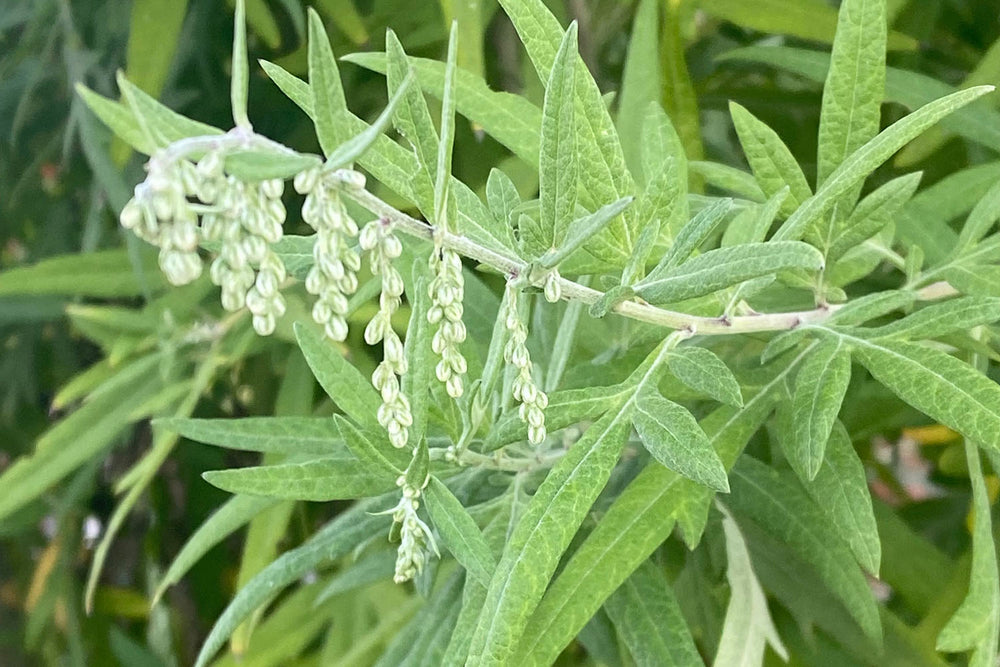
I love mugwort. It is not a showy plant, but few herbs carry as much history. For centuries it has been a herb of travellers, midwives and dreamers, and it still has a place in the modern dispensary when it is used with respect.
Mugwort at a glance
- Botanical name: Artemisia vulgaris
- Plant family: Asteraceae, the daisy family
- Parts used: the leaves and flowering tops, gathered just before or as the plant flowers
- Taste: aromatic and distinctly bitter
- How to recognise it: a tall perennial with deeply cut leaves that are dark green on top and silvery underneath
A herb wrapped in folklore
Mugwort's botanical name honours Artemis, the Greek goddess associated with women, the moon and wild places. In Anglo-Saxon tradition it was one of the nine sacred herbs. Roman soldiers were said to tuck it into their sandals to keep their feet from tiring on long marches, and in parts of Europe it was worn or hung in the home on midsummer's eve for protection.
It also has a long reputation as a dream herb. Folk tradition holds that mugwort placed in a small pillow by the bed brings vivid dreams. These are stories, not health claims, but they are part of what makes this plant so loved.
How mugwort has traditionally been used
Digestion. Mugwort is a classic bitter. In Western herbal medicine, bitter herbs are traditionally used to support digestion and appetite, and are taken in small amounts before or after meals.
Women's cycles. Mugwort is traditionally used in Western herbal medicine as a warming herb to support menstrual comfort. Because of this traditional action on the uterus, it must not be used during pregnancy.
Warmth and ritual. In Traditional Chinese Medicine, dried mugwort is the herb used in moxibustion. In the Western tradition it is often used externally, in infused oils and baths.
Using mugwort at home
Mugwort infused oil, for external use
- Loosely fill a clean, dry jar with dried mugwort
- Cover completely with olive or sweet almond oil and seal
- Leave in a cool spot out of direct sun for 4 to 6 weeks, shaking gently every few days
- Strain through muslin into a clean bottle and label with the date
- Massage a little over the lower belly or tired legs and feet
Calming digestive tea
- Mix equal parts dried chamomile, peppermint and fennel seed, then add a small pinch of dried mugwort
- Use 1 teaspoon of the blend per cup of just-boiled water
- Cover and steep for 5 minutes, then strain. Mugwort is bitter, so a little goes a long way
- Enjoy an occasional cup after meals, not as an everyday drink
A dream pillow
Fill a small cotton pouch with dried mugwort and lavender and keep it near your pillow.
Who should not use mugwort
Mugwort is a herb to treat with care.
- Do not use mugwort if you are pregnant, trying to conceive or breastfeeding
- Avoid it if you are allergic to plants in the daisy family or get hayfever from mugwort or ragweed pollen
- Mugwort is for occasional, short-term use. It is not a herb to take internally every day or in large amounts
- Do not take mugwort essential oil internally
- Mugwort is not suitable for children
- If you have epilepsy, or take prescription medicines, speak with your health practitioner before using it
When to get more support
Painful or irregular periods and ongoing digestive symptoms always deserve a proper look. Please see your GP, and consider a consultation if you would like herbal support that is matched to you.
Keep reading
- Herbal Highlight: Chamomile
- The Herbs Your Grandmother Knew: Natural Perimenopause Support
- Acid Ease Herbal Blend
This article is general information only and is not a substitute for personal advice from your health practitioner.